Painting my way through grief
When I was 17, I painted a terracotta pot for my friend’s grave.
After his funeral, the upturned dirt and absence of grass made me physically sick. We were waiting on the headstone, and in the meantime his space felt unfinished. It felt empty and wrong. Everyone else’s grave had thick green grass, perfectly leveled ground, and fresh flowers. Some even had benches.
I remember feeling jealous.
Jealous that other loved ones had something beautiful to look at. Something that felt complete. Tyler’s spot felt temporary and bland. And that didn’t match who he was at all.
His parents added small statues and flags. His little brother laid down painted rocks. I didn’t know what to do. I just knew I needed to add something. I needed to make it feel more like him.
Tyler wasn’t bland. He was chaotic. Bright. Loud. Always moving. Always laughing. The kind of person who could make anything fun. So my friend and I drove to Home Depot, bought flowers in his favorite colors, and sat on my bedroom floor painting terracotta pots.
We shared memories. We cried. We laughed.
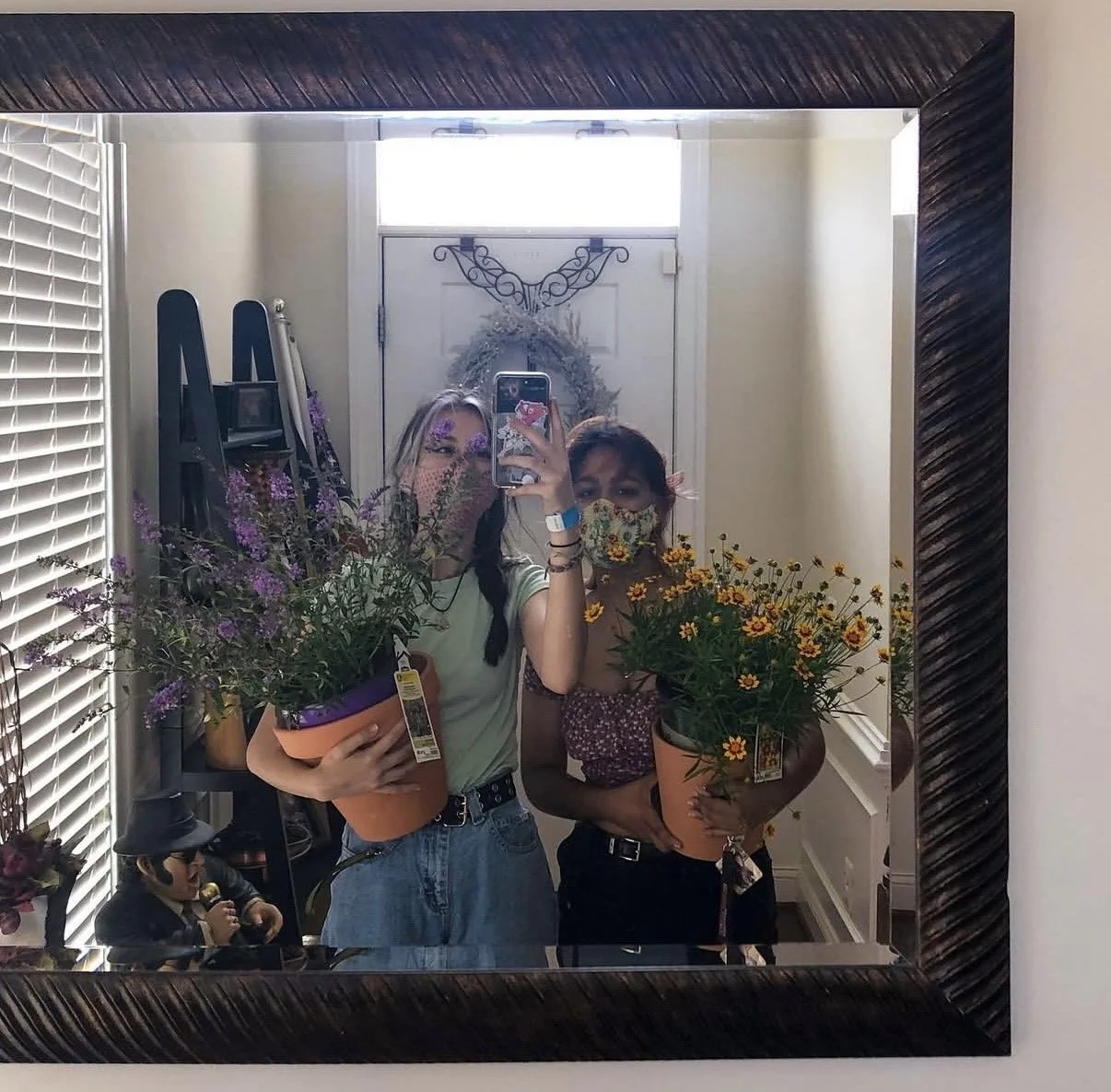
Our flowers and pots before painting.
I painted patterns inspired by his bold Hawaiian shirts — bright colors, lemons, plants. Movement everywhere. My friend painted music notes, a phone charger, a car tire, a stop sign. The tiny, specific details that made him him. Things you wouldn’t understand unless you knew how he would constantly run stop signs, how he always kept a phone charger that didn’t match his phone in his car for other people, how he loved to sing and play instruments.
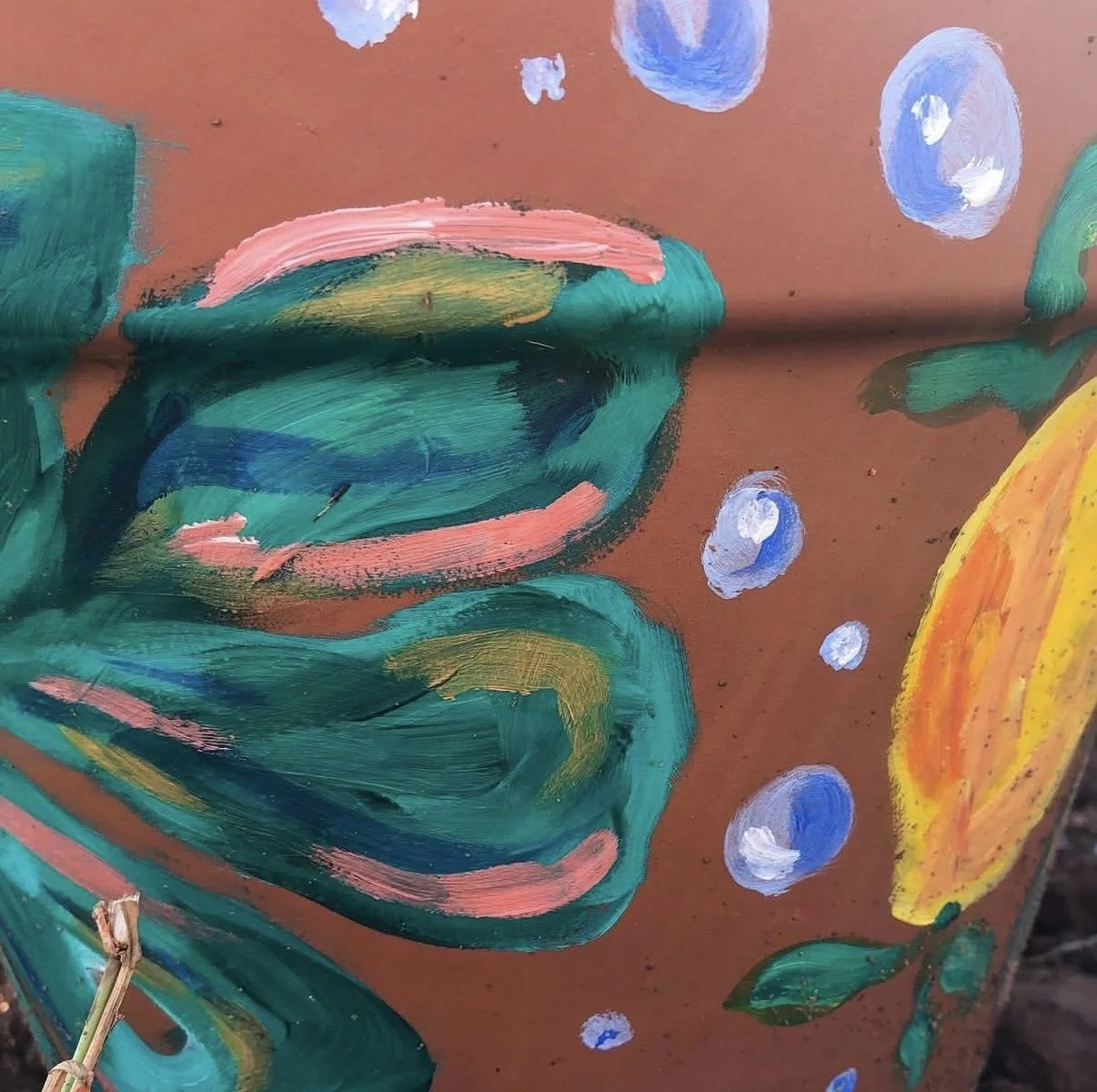
A close up of my painted pot.
We brought the pots to the gravesite and placed them in the dirt. And for the first time since the funeral, I felt like we had done something right.
We visited every day.
The grass slowly grew in. The dirt settled. The seasons changed. The flowers eventually died.
And eventually… I ran out of new stories to tell.
I had shared every memory I could think of. There were no new ones to make. That was the hardest part — realizing that the version of him I carried would never expand. It would only live in what already was and I would be stuck in a constant loop of re-remembering the same handful of memories.
Eventually, I moved across the country for college and stopped visiting the gravesite. But I still thought about it often. I would think about that patch of earth more often than I expected. I wondered if the grass had grown thick. If the space finally looked finished. I drew my fading memories and made prints for my art classes. I told my new friends stories of Tyler.
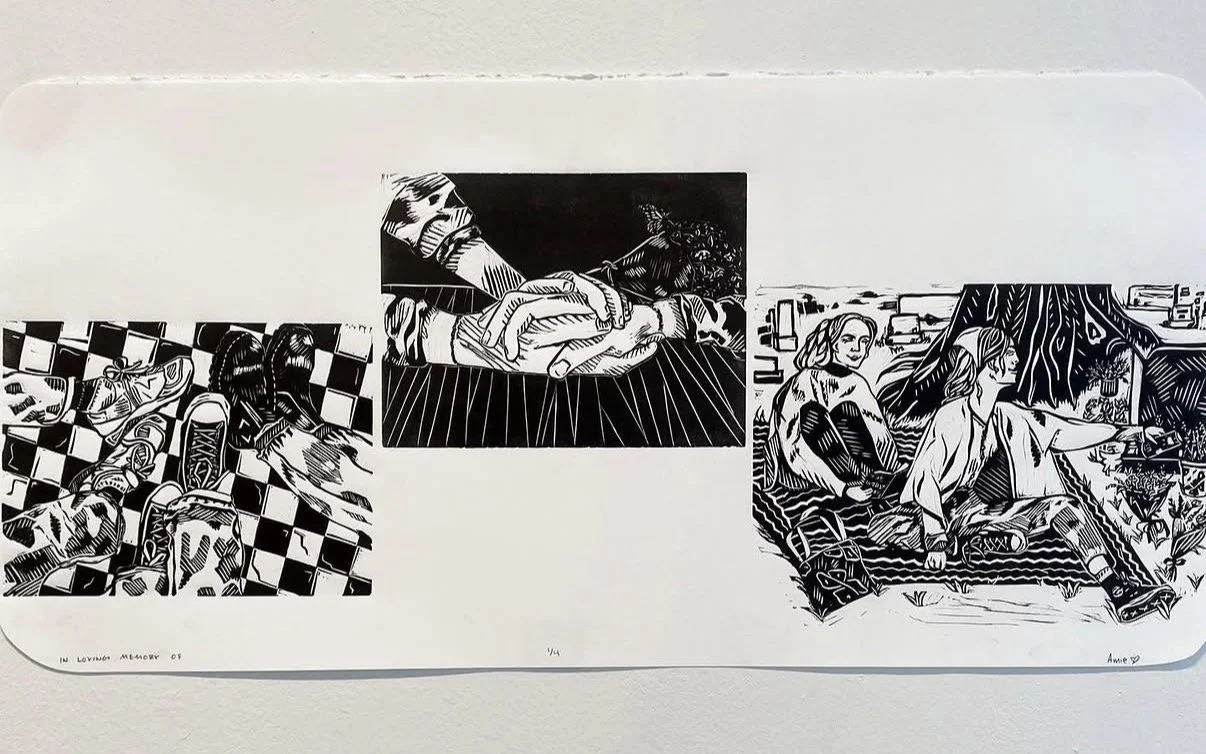
My print series In Loving Memory Of made for my intro to printmaking class about the fading memories, the grieving, and the gravesite
As time passed and my 19th birthday got closer, I started thinking about him in a different way.
Tyler would be 19 forever and I would get older.
He was older than me — two years ahead, already in college, already living a life that, to me, felt so different than mine. He always seemed like he had it figured out.
I just assumed that he would always be my friend that was two years older than me.
The idea of turning the same age he was, and would always be, made me sick. It felt wrong.
It brought back a whole new wave of grief — a deep and helpless ache.
I didn’t know what to do with that feeling, so I made a drawing.
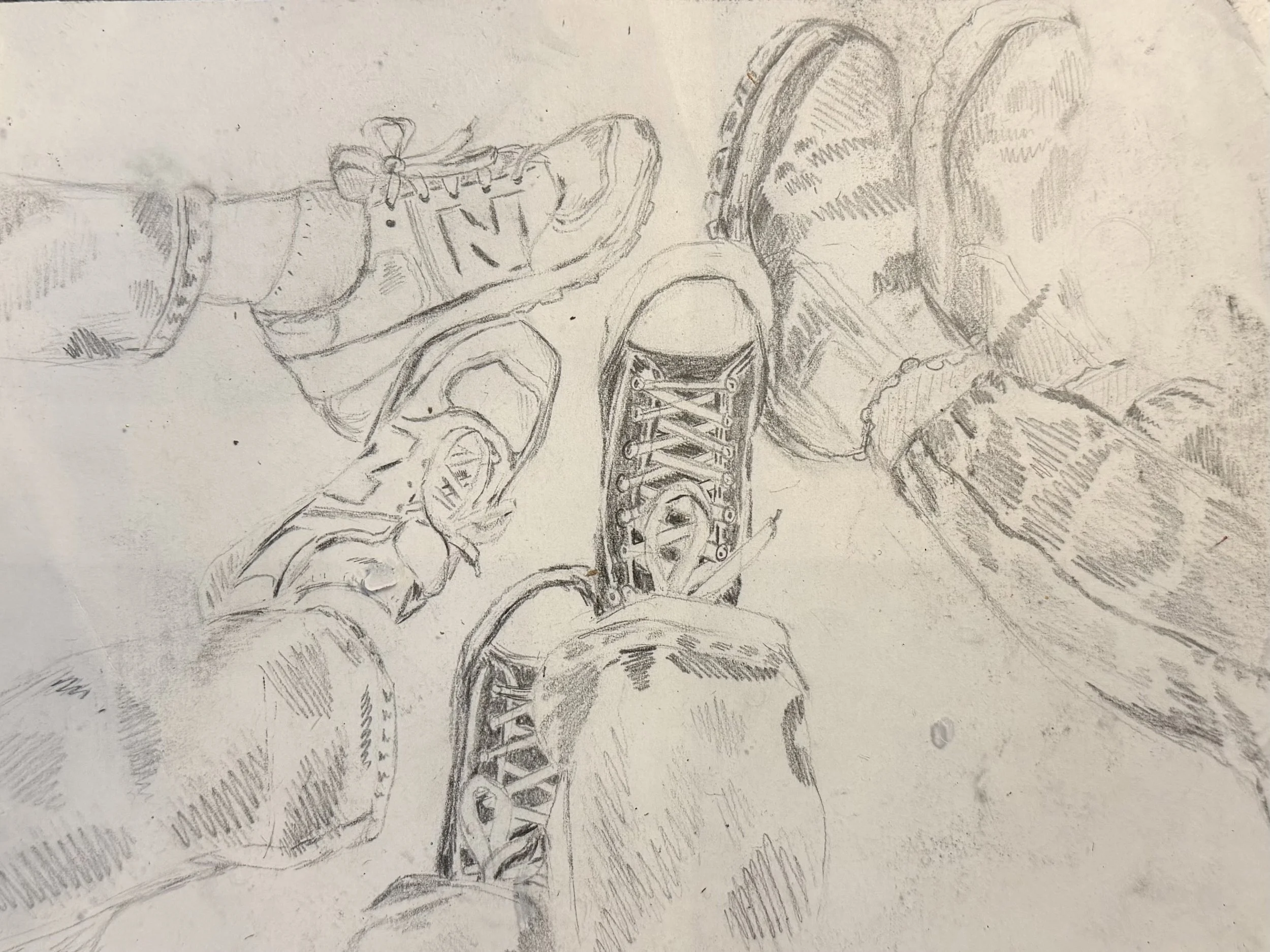
My small pencil drawing of that memory.
I drew a memory.
The three of us sitting in the car during pandemic days. Parked somewhere with nowhere to be. Feet propped up on the center console so we could face each other. Singing “Hey There Delilah” in a dramatic, completely unnecessary three-part harmony. We made fun of his Sperrys in the middle of summer.
It was simple. Nothing extraordinary.
But it was ours.
At the time, I think I made it just to hold onto something — to work through the feeling of moving forward without him, while being so far away from the place I used to go to feel close to him.
Years later, Tyler’s mom reached out to me.
She told me how much those painted pots had meant to her. I had always thought I was making them for him, I didn’t want him to have the blandest grave in the cemetery, but she told me how special it was to see her son through our eyes. Through the details we chose. Through the colors.
She told me how she helped take care of the plants. Kept them alive as long as she could. That those small, handmade things had meant more than I ever realized.
It was a way for us to show her how we loved him.
She asked if I would create something similar now, something that held my memories of him and could represent how I see him.
While trying to decide what to paint, I remembered that drawing.
That small moment I had held onto.
The car on a hot summer night.
The laughter that we couldn’t stop.
The song that I just couldn’t get the harmony right to.
We had plans to make it through every Quentin Tarantino movie that summer. We never did. I thought we had more time than we did. I had known him for years, the crazy guy cracking jokes, making friends with everyone, but I never imagined our friendship would be cut short the way it was.
So that’s the scene I painted.
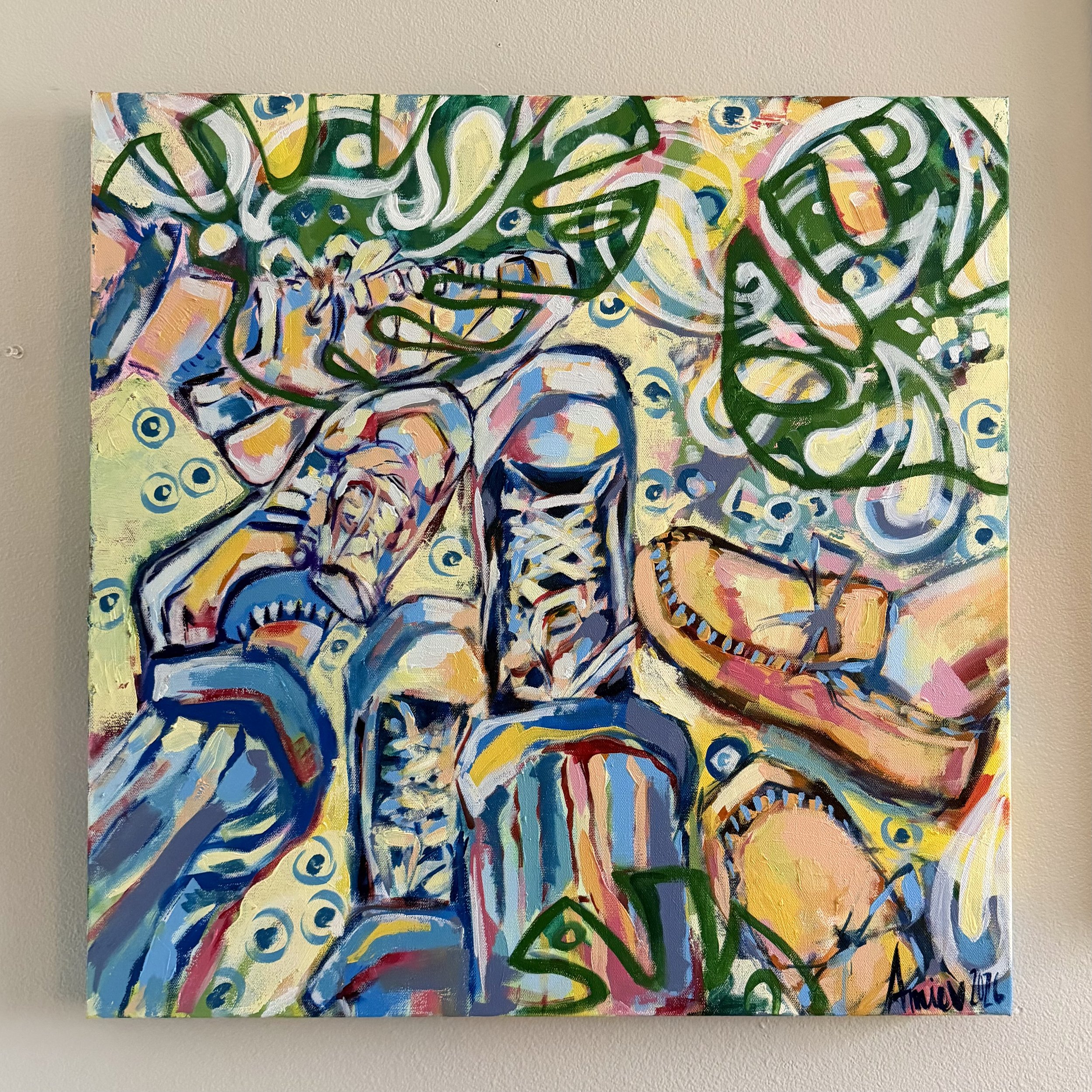
My painting Hot Summer Nights, Mid July, 24”x24”, oil on canvas
I miss my friend.
And I always will.
But every moment I spent working on this painting felt like another moment spent with him. Like sitting in that car again. Like hearing him laugh.
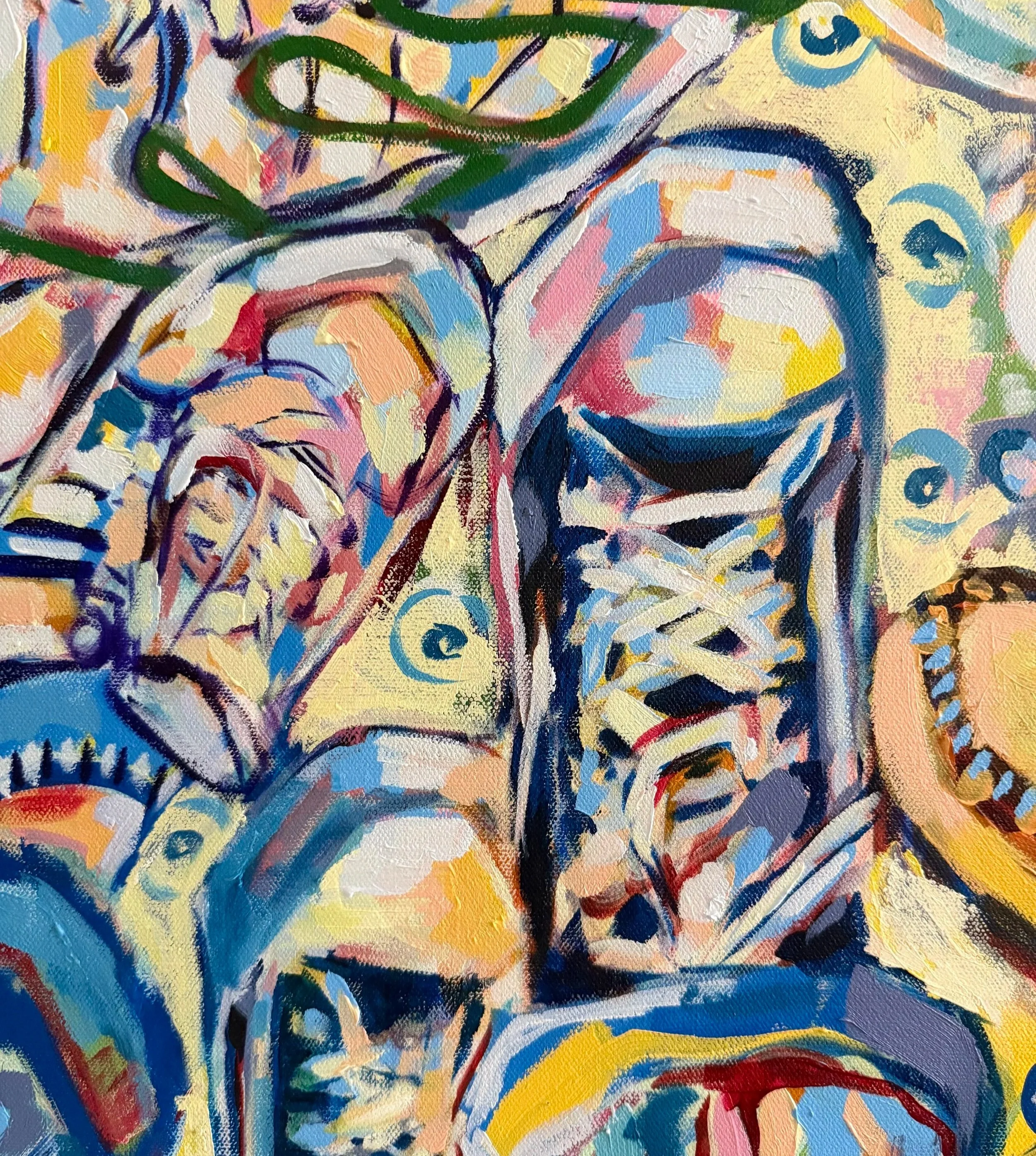
A close up of the work
This painting doesn’t bring him back.
But it holds a version of him that still feels alive to me.
Art can’t undo loss.
But it can hold memory.
It can give grief somewhere to go.
It can turn love into something you can see.
Art is sharing.
Art is love.
Art is how we make sense of things.