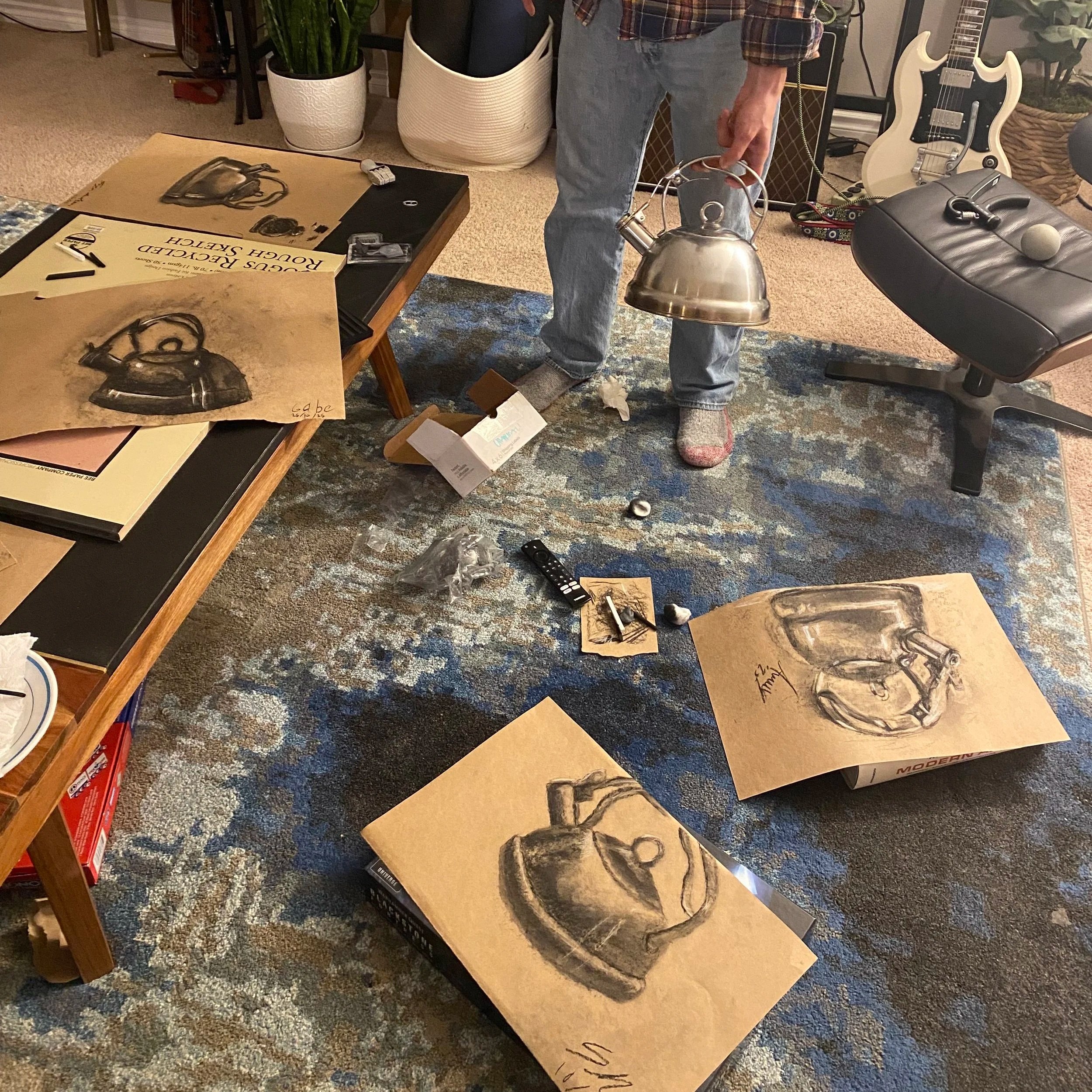
Art Night including a very traditional still life of a shiny kettle might SOUND boring I know but I do this for a reason.
I always start with still life because it removes the idea of talent from the equation. Drawing isn’t about having a special ability. It’s about training your eyes to notice shape, value, and light.
I run art night with a mindset borrowed from Ratatouille. As Chef Gusteau says, anyone can cook. I truly believe the same is true for drawing: anyone can draw.
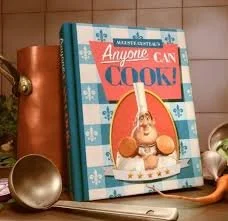
The book Anyone Can Cook! from the pixar movie
Just like cooking, drawing isn’t something you’re born knowing how to do perfectly. But just as you have taste buds that tell you when food is good or bad, you already have the visual instincts needed to draw. Drawing is simply a way of observing the world more carefully and slowing down something we do every day without thinking: seeing.
That’s the moment I’m always hoping will click at art night.
Still lives force you to slow down and really look. The objects are ordinary—usually things I gather from around my house shortly before guests arrive—but that’s the point. You’re not drawing what you think an object looks like. You’re drawing what’s actually there: the shapes, the shadows, the awkward angles, the subtle shifts in value.
It’s not about perfection. It’s about paying attention.
I spend most of the night repeating the same reminders:
Trust your eyes.
Squint!
You’re not drawing a kettle—you’re drawing shapes!
Look at the VALUE!
Squint again!
Why Shiny Objects?
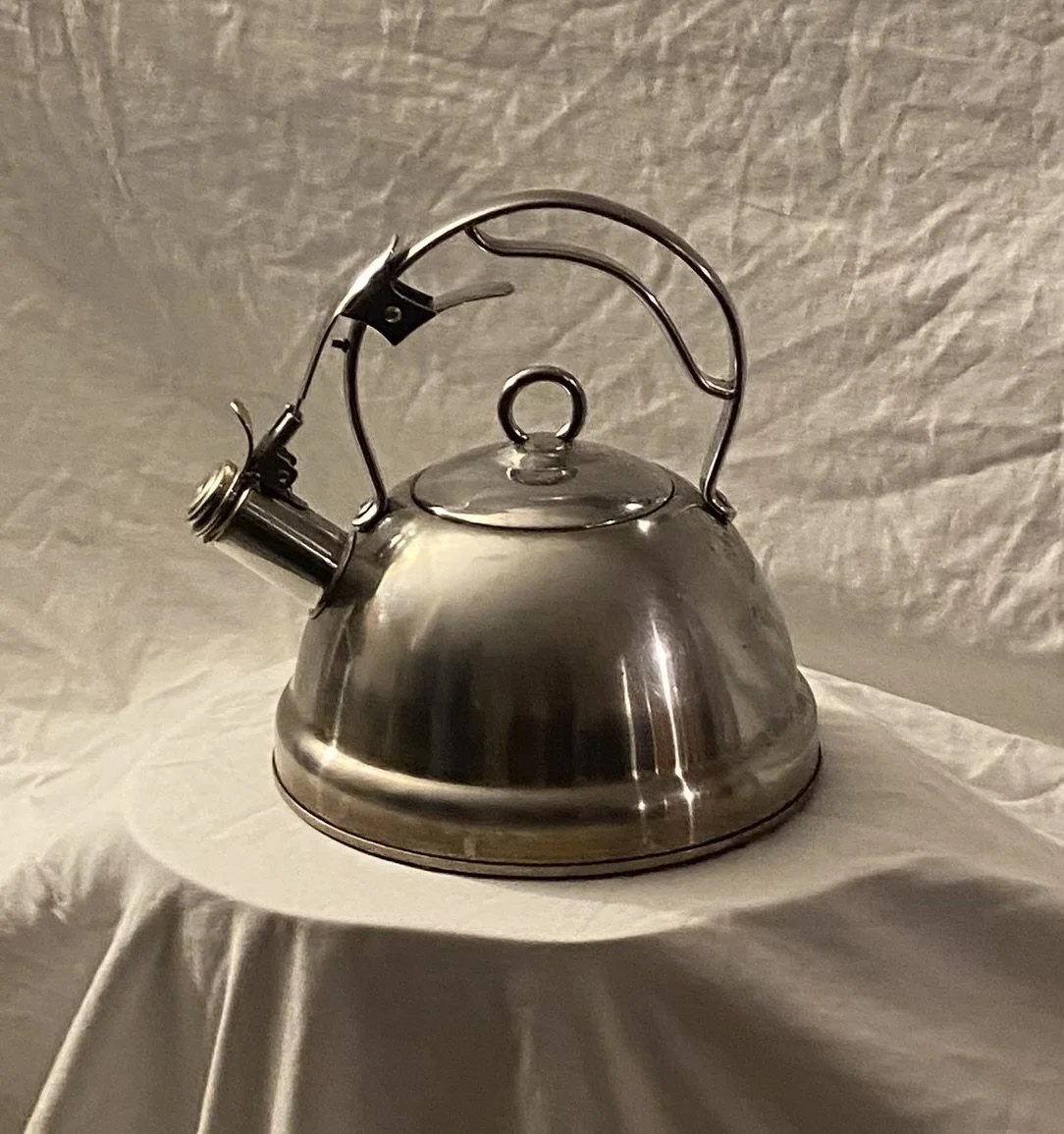
the kettle!
In my first drawing class in college, my professor had us draw a small metallic cat statue. It was stressful. Reflective surfaces, at first, feel daunting and unforgiving, but that couldn’t be further from the truth.
Within those exaggerated highlights and distorted reflections is a clear collection of high-contrast shapes. The shifts in value are bold and easy to see. That single exercise taught me more about drawing than almost anything else. It trained my eye to recognize value, contrast, and edges in a way nothing else had.
Shiny objects don’t let you rely on what you THINK the object looks like. You have to look and commit to what you see.
Only shiny objects place the darkest darks and lightest lights right next to each other. They demand trust in your eyes.
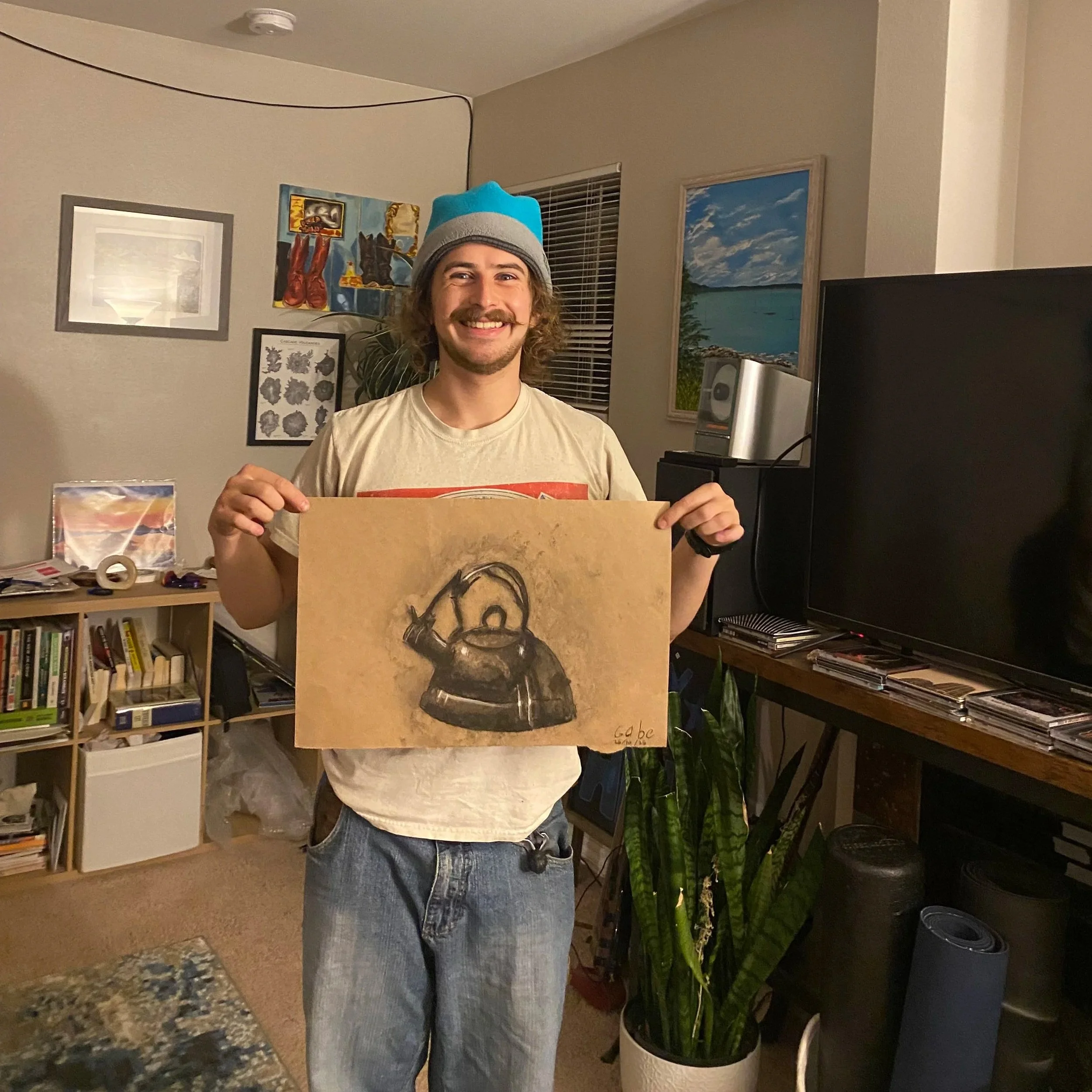
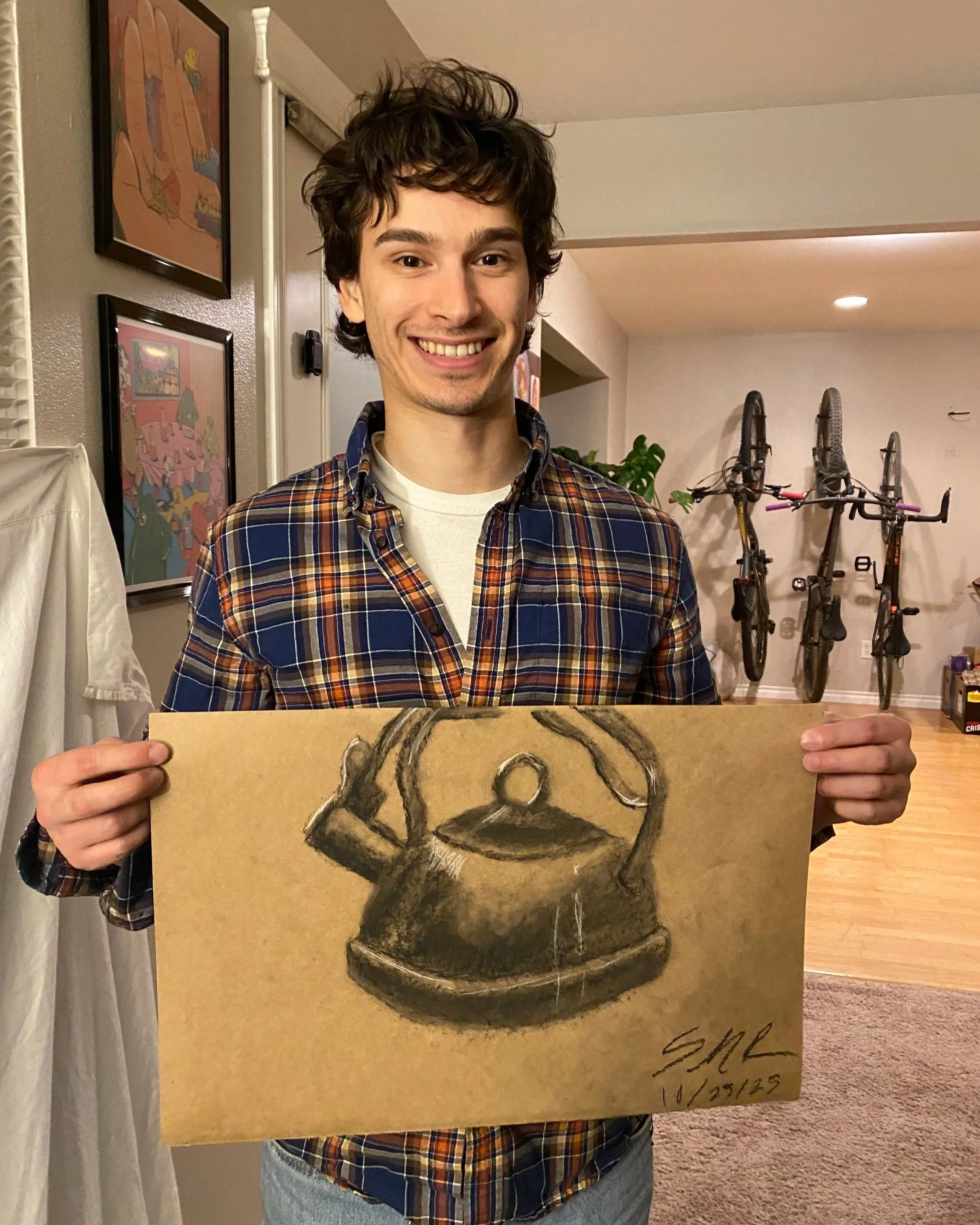
At art night, the kettle becomes the great equalizer. Everyone is looking at the same object but no two drawings ever come out the same.
Anyone Can Draw
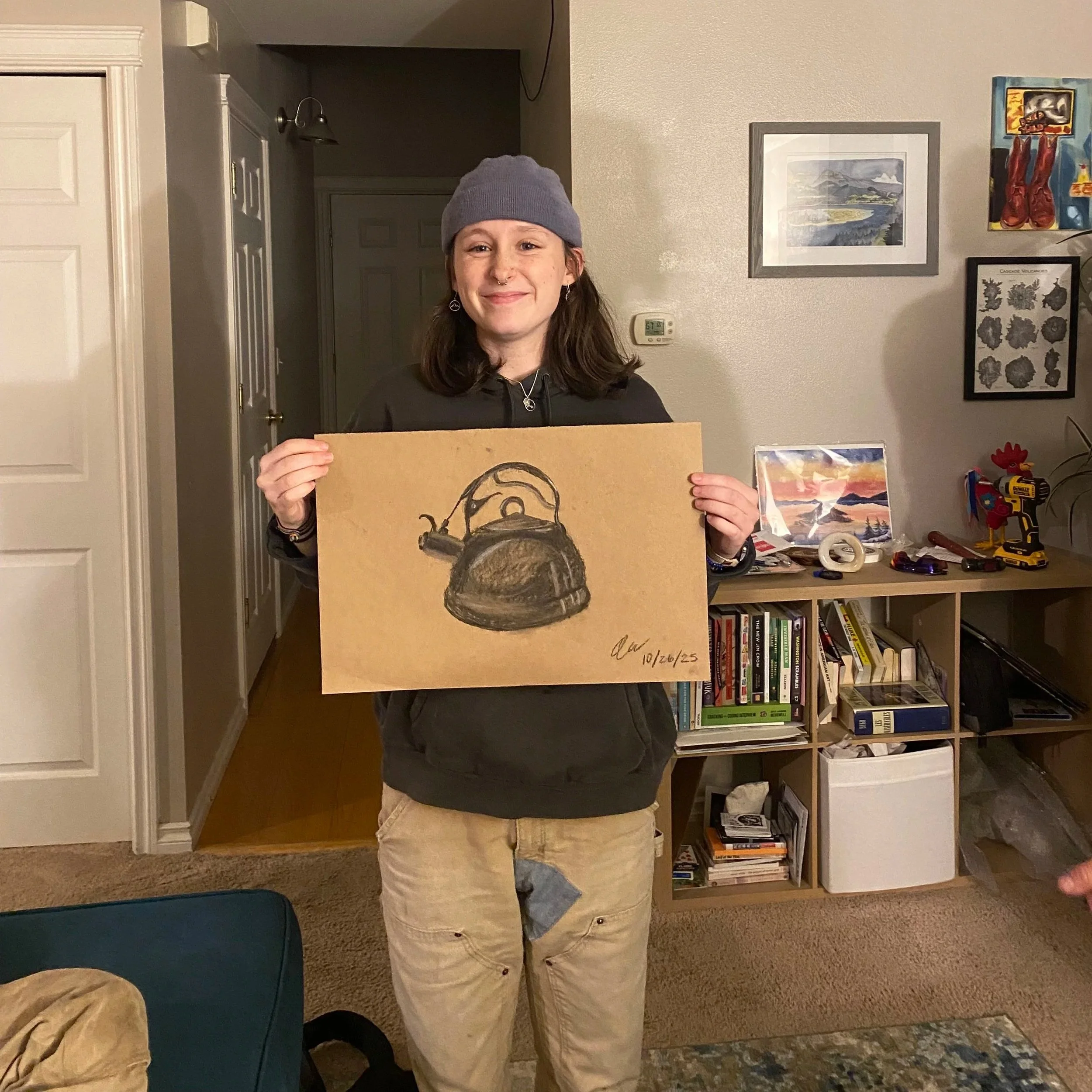
a happy Ainsley with her finished drawing!
I truly believe this. And I watch people prove it to themselves every time.
As everyone works, I walk around offering small tips and pointers, not to make the drawings look alike, but to help each person lean into how they see. Some people are graphic, some loose, some incredibly detailed. My job isn’t to correct but to translate what they’re already doing into clearer observation.
I give the most encouragement to those who arrive quietly muttering, “I’m so bad at drawing, but I’ll try.”
By the end of the night, the room is always filled with disbelief.
“I didn’t know I could do this.”
“I’ve never drawn anything like this before.”
“I thought I was bad at drawing.”
And yet—there it is. On the page.
Why I Keep Doing This
Art night isn’t about producing finished pieces. It’s about removing fear from drawing. It’s about proving that observation is a skill, not a gift. And it’s about giving people a quiet moment to focus, look closely, and surprise themselves.
Interested in joining art night and local to the Bellingham area? Reach out via email at amieartstudio@gmail.com